Invocation Leaders
October 12th - Bill Kent
October 19th - Matt Maggio
October 26th Shawna Sorenson
Invocation Leaders
October 12th - Bill Kent October 19th - Matt Maggio October 26th Shawna Sorenson |
Picture of Rotarian in the “Messenger”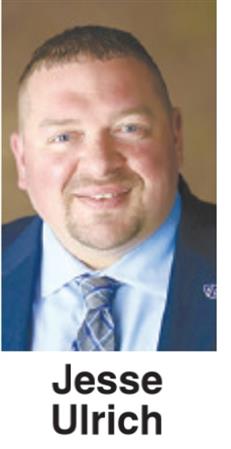
An article in the Monday “Messenger” announced that Rotarian Dr. Jesse Ulrich was awarded the prestigious Virgil Lagomarcino Laureate Award by Iowa State University. The award is given to an individual that graduated from the ISU Education School and has since provided outstanding service to the Education Profession. Dr. Ulrich has his MA and PHD from ISU. |
Picture of Rotarians in the “Messenger”
The Wednesday “Messenger” contained a front page discussion of a recently held Candidate's Forum hosted by the Fort Dodge Growth Alliance. Rotarian Kuhlman was the Master of Ceremony and Rotarian Miller was a primary participants as she debated her opponent for the November Election. |
Chaz Allen and the Iowa Utility Association
Monday's guest speaker was Chaz Allen of the Iowa utility Association, whose primary members are: Black Hills Energy; Mid American Energy; iTC; and Alliant Energy, the primary providers of gas and electricity energy for Iowa. Through the half hour discussion we learned that gas and electric availability is quickly becoming the best draw to the Midwest for economic development, replacing the prior major draws of available workforce and 4-lane highways. In this regard, Iowa has ample supplies of both energy sources and has the lowest electricity rate of any of the 50 States. To maintain that record involves a long-range plan combined with input from major industries as to their needs 5, 10, and 20 years into the future. Other major discussion points were:
|
The “Rotary Magazine”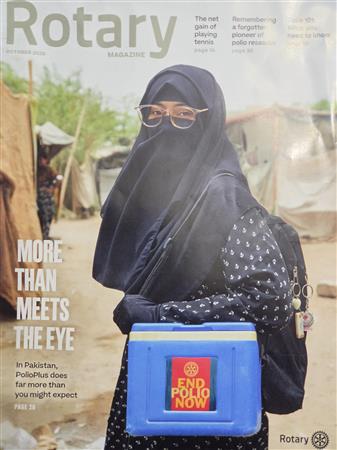
The October “Rotary Magazine” is devoted totally to Polio, past, present, and future. It is fitting that this edition precedes the October 24th World Polio Walk that our club will be a participant. In the modern era Polio has become a nearly forgotten disease that once affected millions. It is becoming more difficult to find people who remember the “scourge.” Therefore, our club will aid Rotary International in providing a worldwide emphasis that Polio still exists and our eradication effort is not quite complete. To that goal the “Rotary Magazine” highlights recent efforts to immunize children in Pakistan by using both native workers who are assisted by people who carry examples of what Polio can do to the human body and its bones. As quoted in the magazine RI states that the wild strain of Polio is eliminated in all but two countries - Afghanistan and Pakistan, in an area that is hard to reach and is controlled by traditional Islamic families skeptical of all things western. But the good news is that last year Pakistan had reduced the number of new cases to 17, and from January to October of this year that number is 3. Google states in a search that the number in Afghanistan in 2026 is 32. Fort Dodge can still count older individuals who have the signs of Polio deformities acquired as children prior to the immunization efforts beginning in 1955. Your eBulletin editor remembers when a child was diagnosed with Polio in rural Nebraska prior to the vaccines all children were confined to their homes/farms and schools closed until the parents were somewhat assured the virus had left the area. As a young child it was a very scary time, but the quarantines of my parents kept me from the disease. |
Picture of Rotarian in "The Messenger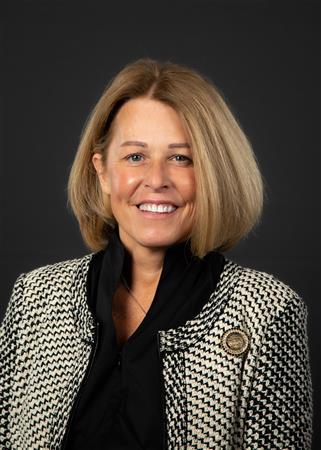
Rotarian Meyer appeared in the Wednesday “Messenger” as part of a discussion on estimated funding for EMS services in Webster County. Original EMS regulations did not include the tax being levied on TIF properties. A later Legislative amendment as outlined by Representative Meyer said TIF properties are now included, which would provide an approximate increase of $250,000 to the program. |
Berlin 1945 to 2026 (Rubble to Awesome)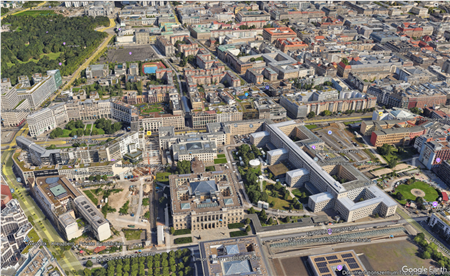
The club's presentation was how Berlin has recovered from the end of World War II and its partition between East and West from 1945 to the current. When asked which European city would the presenter visit again, the quick answer was Berlin. In 1945 the city lay in ruins with 99% of all buildings being damaged in some manner and approximately 60% deemed beyond repair. From 1945 to 1990 the city was partitioned (approximately 50/50) between the Communist/Socialist East and Capitalist West most notably known as the Berlin Wall - an approximate 97 mile strip of land in most areas one block wide that surrounded West Berliners from their Eastern relatives. Berlin itself was surrounded by East Germany, further complicating Cold War politics. West Berlin was financially supported by the American Marshall Plan and re-infusion of German capital spirited to Argentina and Switzerland in the last years of the war. The West Berlin revival became noticeable with the desire to show a sharp contract between Communism and Capitalism. The Wall was constructed to keep East Berliners from moving to the West. The Eastern half of Berlin remained relatively undeveloped and a very slow revival - rubble well into the 1990s. When the Wall was opened in 1990 money flowed to East Berlin because land was cheap and government subsidies helped spur development. Today, the rapid growth of “awesome” is continuing and many world companies are locating in Berlin. Some examples given in the presentation were:
|
The Story of Manning, Iowa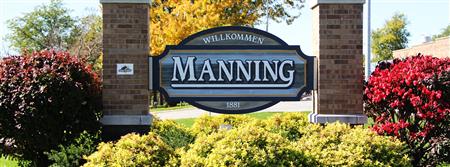
Editor Note: This narrative may be expanded by the Editor, who experienced family and work issues to prevent its completion for this publication: Our guest speaker on September 21st was Tim Wiebel, Vice President of the Manning Rotary Club. Tim outlined how a small town of 1,300 in West central Iowa faced the farm crisis of the 1980s by coming together and forming a local development partnership of many avenues that now has led to the creation of a World Class Heritage Center, a very vibrant downtown as per the Mainstreet USA example, construction of new housing of many types, renovation and cleaning of existing properties, expanding a municipal utilities program that has since funded/fostered many community projects, construction of a modern hospital/medical complex, implementation of a data center that compliments the community, underground electrical and fiber, further consolidation and construction of a regional school system, and many others. It is quite a success story that many other communities should follow. |
Minutes and Financial Reports
Did You Know? Club documents can be found in the members only section of the website, under Folder Organization and then Subfolder Documents? ) and are available for viewing by accessing the Members Only Section. Please contact Steve if you need to refresh your password. |
Club's Application for Funds for Various Projects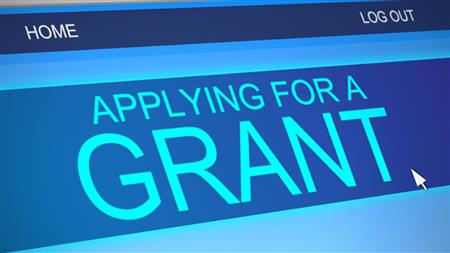
Rotary is a service organization comprised of community leaders of various professions dedicated to humanitarian causes locally and throughout the world. The club budgets funds annually for a variety of local causes that may be made available for requests made throughout the year for which the Board of Directors may want to support. To apply for funds, complete the application online by clicking HERE. Fort Dodge Noon Rotary Club Grant Guidelines
|
How to Contribute to the Rotary Foundation
It is easy to contribute to the Rotary Foundation, the major financial arm of Rotary that does Polio Plus and Foundation Grants. An icon has been added to the top of the club webbsite and appears on the eBdulletin. Click on this applet and you will be directed to Rotary International to their web portal that takes you through the easy contribution process. If you have issues in this process, please contact Treasurer Elizabeth Stanek or Foundation Chair Bill Kent. |